Hedge Trimming in Thornton Heath

Our hedge trimming in Thornton Heath is designed to keep boundary hedges, screening plants and shaped garden hedges neat, healthy and manageable. We provide a careful cutting service for domestic gardens and frontages, with attention to the finished outline, the growth habit of the hedge and the practical needs of the space. Whether you want a crisp formal line or a softer, more natural finish, we trim to suit the plant and the setting rather than forcing every hedge into the same look.
The work can include seasonal reduction, routine maintenance cuts, height control, shaping and tidying after a period of rapid growth. We also look at what is underneath and around the hedge, so the cut leaves the garden usable and the border clear. If the hedge has become uneven, too wide or difficult to maintain by hand, a structured trim can restore proportion and make future upkeep more straightforward.
For a straightforward quotation, share the hedge type, approximate length, access and the result you would like to achieve. Contact us today if you want the trimming discussed before you book. A clear description helps us suggest the right level of work.
What our hedge trimming service covers
We trim many common garden hedges, from narrow decorative runs to larger privacy hedges that need a more disciplined cut. The service can focus on keeping the top level, tightening the sides, or bringing back a shape that has drifted beyond the original line. A hedge does not always need a heavy reduction; often the best result comes from removing the right amount of new growth and guiding the plant back into balance. That approach supports a tidy finish without making the hedge look harsh or overworked.
Our trimming work is useful when the hedge is starting to spill into paths, fences, driveways or neighbouring spaces. We can also help where the hedge has become too dense for light and air to pass through evenly. In those cases, selective cutting and sensible shaping can improve appearance while keeping the hedge suitable for regular maintenance. If the plant is already stressed, we work conservatively and avoid unnecessary cutting that could leave it thin or patchy.
If you are planning a refresh rather than a full reduction, it helps to think about the final line you want to keep. A hedge can be maintained for height, width, symmetry or screening, and each aim calls for a slightly different approach. Tell us whether the hedge needs a one-off correction or a repeat maintenance visit so the quotation reflects the work properly. For a quick start, you can also review our services overview to see how hedge trimming sits alongside the wider garden work we offer.
Shaping and maintenance for healthy growth

Regular hedge maintenance is not only about tidiness. The right cut can support denser growth, improve the outline and stop one section from dominating the rest. Many hedges respond best to repeated light trimming rather than the occasional severe cut, especially when the aim is to keep them compact through the growing season. We therefore shape with the long-term form in mind, so the hedge remains practical to maintain and consistent from one visit to the next.
Different hedge types call for different methods, and the timing of a trim can matter as much as the amount removed. Soft, fast-growing hedges may need closer attention than slower-growing evergreens, while formal boundary hedges often benefit from a cleaner, more exact finish. We work to the condition of the hedge in front of us, not to a one-size-fits-all idea of trimming. That keeps the result better suited to the plant and the garden layout.
If you are comparing hedge care with other garden tasks, it may help to think about the whole boundary and not only the top line. We can look at adjoining planting, nearby lawn edges and access points at the same time where relevant. If you would like to discuss the hedge and the wider garden together, our garden maintenance page gives a useful sense of how ongoing care can be organised across different areas.
Reducing height, width and overgrowth
Some hedges need more than a light tidy. When growth has extended too far outwards or climbed beyond a sensible level, a reduction can bring the hedge back under control. That work needs judgement, because cutting too aggressively can leave the hedge thin or expose bare sections. We aim for a result that restores shape while keeping the plant looking intentional, which is especially important along front gardens, entrances and shared boundaries.
Width reduction can be just as valuable as lowering height. A hedge that has grown too deep can eat into usable space, shade beds or narrow paths, and make routine maintenance awkward. By taking back the sides carefully, we can recover room and improve the hedge’s profile without turning it into a harsh slab. In some cases, a staged approach is the better answer, particularly where the hedge has not been cut properly for a while.
Ask for a quotation if the hedge has outgrown its space and you want a clear, practical plan. You do not need a long brief, but it does help to mention any awkward sections, limited access or nearby features that need extra care. For jobs involving larger cutback or adjoining greenery, our landscape gardening page can help you see how hedge work can sit within a fuller garden improvement plan.
Boundary hedges, front gardens and privacy screens
Hedges often serve several roles at once. They mark boundaries, soften hard lines, protect privacy and give structure to a garden. Because of that, trimming is not simply a cosmetic task; it is part of keeping the garden functional. A front hedge may need a neat face to frame the property, while a screening hedge may need careful height management so it continues to do its job without overwhelming the surrounding space. We adjust the work to suit that purpose.
Where a hedge runs beside a pavement, drive or fence, the trim needs to be accurate and controlled. Overhanging branches, loose growth and uneven sections can make the space feel untidy very quickly, while a clean line can improve the whole frontage. We can also tidy mixed boundary planting where the hedge is part of a broader garden edge. If the hedge sits beside paving or timber features, it is often sensible to think about related upkeep at the same time, especially where growth is pressing into other surfaces.
For projects that include edging, boundary plants or nearby garden features, our decking services page may be useful if the hedge sits close to a timber seating or access area. Keeping the hedge line clear can help the whole space feel ordered. If your main need is hedge trimming rather than a wider redesign, tell us where the priority lies so the quotation is based on the actual work required.
How we assess the work
Good hedge trimming begins with a sensible assessment. We look at the hedge species where possible, the current shape, the amount of growth to remove and any difficult access that might affect the method used. That matters because a narrow formal hedge, a mature privacy hedge and a younger ornamental hedge each need a different touch. A careful assessment helps avoid unnecessary cutting and supports a finish that looks deliberate rather than rushed.
It also helps to know whether you want a one-off correction or ongoing maintenance. If a hedge has been left too long between cuts, it may need a stronger first visit to bring it back into line before lighter upkeep can resume. In other cases, a modest trim is enough to maintain a shape that is already in good order. We use the condition of the hedge as the guide, which is the fairest way to estimate the work and plan the tools needed.
When you request a quotation, include a brief note about the size of the hedge, whether it is a single row or part of several boundaries, and whether waste needs to be taken away. Those details help us give a quote that matches the job more closely. If you want to see how this service fits with other garden tasks, our services overview gives a broader picture of the work available.
Trimming methods and finish options
There is more than one way to finish a hedge, and the best choice depends on the look you want and the plant you have. A formal hedge may call for sharp lines and an even top, while a softer hedge can be shaped with a slightly more relaxed profile. We can work to preserve a straight run, ease out bulges, or bring back a cleaner taper so the base does not become too narrow for healthy growth. Each of these details changes the way the hedge reads from a distance.
For some gardens, the key decision is whether the hedge should remain at its current height or be brought down a little. For others, the main issue is width, especially where the hedge has started to claim paths or reduce space around a patio. We handle those choices in a practical way, taking account of the hedge’s current condition and what it needs to keep looking good. Careful finishing matters, because a hedge often sits at the edge of the most visible part of the garden.
If you are ready to talk through the finish you want, use plain text or a brief message to describe the result and ask for pricing. If your garden work extends beyond hedges, our lawn mowing page may also be relevant when the trim forms part of broader seasonal maintenance. A balanced boundary can make the whole garden feel more settled.
Waste handling and tidy completion
Hedge trimming usually creates a fair amount of cut material, particularly where the hedge has thickened or needed a reduction. A tidy finish therefore includes what happens after the cut as well as the trim itself. We can discuss removal of arisings as part of the job so the space is left clear and ready for use. That is especially useful where the hedge borders a driveway, entrance or narrow side access that needs to stay open.
Tidy completion also involves checking for stray branches, awkward ends and uneven sections that may be missed during the main cut. The aim is to leave the hedge with a consistent appearance and the surrounding area in good order. In a busy garden, even small amounts of leftover material can make the whole space feel unfinished, so the final stage matters. It is often the difference between a hedge that has merely been cut and one that looks properly maintained.
If hedge cuttings are likely to be substantial, mention that when asking for a quotation so the work can be costed properly. Where the surrounding garden needs additional clean-up, our garden clearance page may be helpful for understanding how larger green waste tasks can be handled. Tell us what needs clearing and we can factor it into the plan from the start.
Preparing for a quotation

A useful quotation starts with a few simple details. If you can describe the hedge type, approximate length, visible height and whether the work is routine or overdue, that gives a good basis for estimating the task. You can also note whether the hedge is easy to reach from a garden path or whether access is more restricted. Those practical points are more valuable than a long explanation, because they affect the time and equipment needed.
If you are unsure about the exact wording, a quick description is enough: front hedge, rear boundary hedge, side return, tall screening hedge, or mixed trimming across several sections. Photos can be helpful, but the main thing is to say what outcome you want. A neat top, a narrower line, a lower profile or a general tidy-up all suggest different amounts of work. That means the more clearly you describe the aim, the easier it is to prepare a sensible quotation.
For broader garden updates, our garden maintenance page can help if you want hedge trimming considered alongside other recurring tasks. Request a quotation when you are ready, and include any timing preferences or access notes that might affect the schedule.
About Thornton Heath
Thornton Heath is a district in the London Borough of Croydon, in south London, and it sits on a well-used urban corridor between central Croydon and neighbouring parts of south London. The area developed strongly in the nineteenth century, when railway links and suburban growth encouraged new housing, shopping streets and local institutions. Today it is a busy and diverse place with a mix of Victorian and later terraced housing, civic buildings and everyday retail frontages that give it a distinctly lived-in character. The main shopping stretch around Thornton Heath Pond and High Street remains a recognisable focus, while smaller residential roads spread away in neat grids and short terraces. The area is also known for Crystal Palace F.C.’s Selhurst Park, which lies close by and contributes to the local identity, especially on match days when the surrounding streets take on a different rhythm. Local green spaces and smaller parks provide contrast to the built-up streetscape, and the district’s train station keeps it closely connected with the wider capital. That combination of transport links, Victorian development and dense urban neighbourhoods gives Thornton Heath a varied townscape rather than a single uniform centre. Its history is visible in the surviving terraces, parade shops and mixed-use streets that continue to anchor daily life, while the area’s modern character comes from the people, businesses and movement that pass through it every day.
Hedge trimming in Thornton Heath often suits the mix of front gardens, boundary planting and smaller plots found across the district, where a clean edge can make a noticeable difference to the look of a property. Regular trimming keeps hedges in proportion with the built surroundings. If you want to keep the shape of a boundary hedge, recover control of growth or simply bring a garden frontage back into order, we can help with the practical side of the work. For further information about how we handle enquiries and arrangements, you may wish to read our contact us page and ask for a quotation.
We also explain practical standards and customer care on our health and safety policy page, while the pricing and quotes page gives a useful route for anyone comparing the main factors that affect the cost of hedge trimming. Get in touch for a quotation when you are ready to talk through the hedge and the finish you want.
Other garden work that can sit alongside hedge trimming
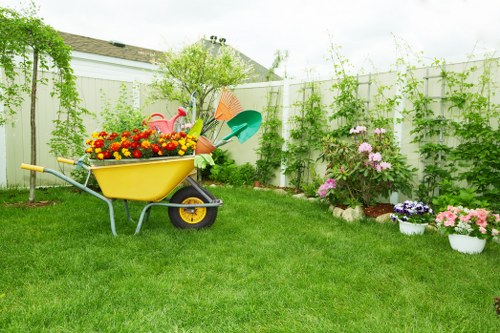
Some customers want hedge trimming as part of a broader seasonal tidy rather than as a single task. In those cases, it can be sensible to combine the hedge with related garden work so the whole space is handled in a practical sequence. That might include lawn care, general maintenance, light clearance or shaping of nearby planting. The aim is not to add unnecessary work, but to make sure the garden feels coherent once the hedge has been cut back and the main lines are visible again.
If the hedge is one feature within a larger garden that also needs improving, broader services can sometimes help bring structure back to the plot. A trimmed hedge can reveal the shape of the rest of the garden, making it easier to see whether edges, surfaces or planting areas need attention. That is why many people prefer to think in terms of the whole boundary and layout, rather than looking at the hedge in isolation. For some gardens, the most useful result is a neat hedge that frames everything else without dominating it.
You can keep the enquiry brief and still get a useful quotation. Just describe the hedge, the result you want and any extra garden areas that need attention at the same time. If you would like to continue, request a quotation today and let us know how the hedge should look when the work is complete. If you need the broader picture, our landscaping page is another place to compare related garden improvements before you decide.